Tizi Cute Kitty: Pet Cat Games
- 3.2
- Rating
- 5.00M
- Installs
- Free
- Price

 Analysis by App-foxy
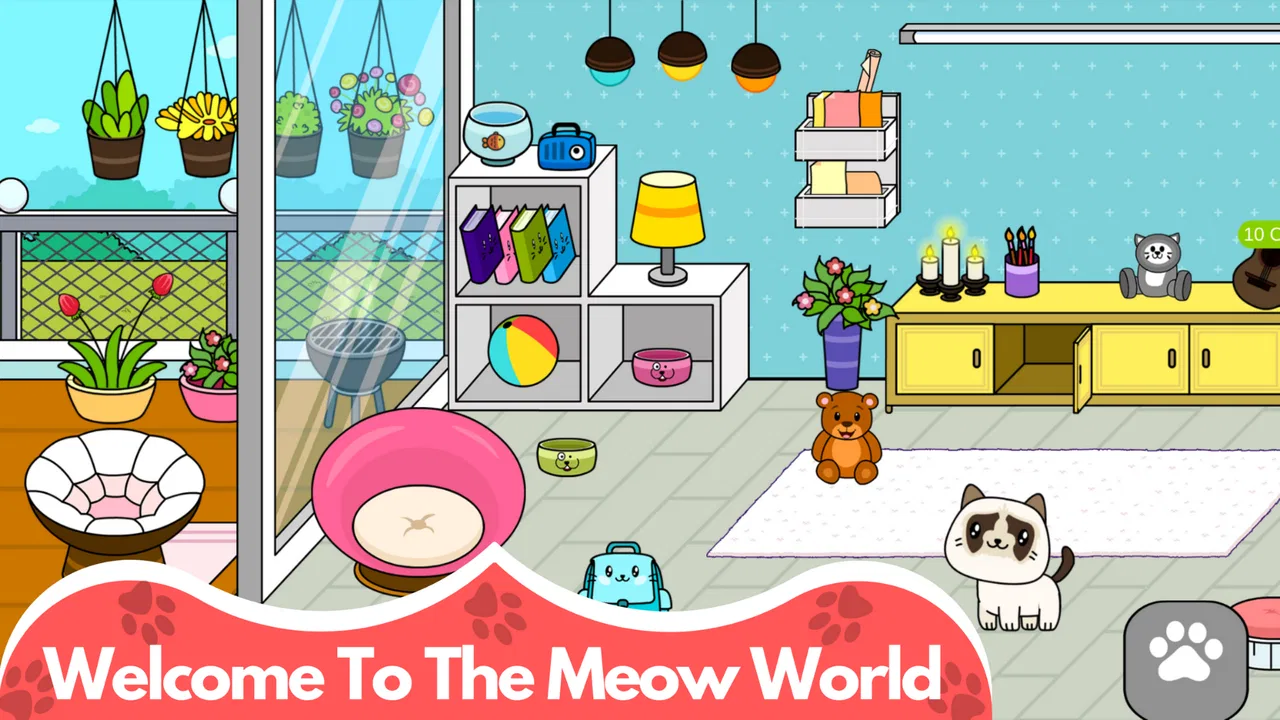
Some games are built around winning, collecting, or mastering a difficult system. Tizi Cute Kitty: Pet Cat Games takes a gentler route. It presents a playful cat-themed space where the main appeal is arranging rooms, exploring a cute setting, and creating small stories at your own pace. After spending time with it, I see it less as a traditional challenge game and more as a child-friendly creative toy with light game elements.
That distinction matters before you download it. If you want levels, competition, complex puzzles, or a clear sense of progression, this probably will not keep you busy for long. If you want something calm that lets a child interact with adorable characters and experiment with room design, it makes much more sense. I would describe it as an educational game for imaginative play, rather than an educational title that teaches through formal lessons.
It is free to install, with optional purchases ranging from $1.99 to $9.99 per item. The game is rated Everyone, and it comes from Tizi Town Games. Its average rating is 3.2 from around 7,200 ratings, while the game has passed 5 million installs. Those figures suggest that it has found a sizeable audience, although the middling score also hints that its simple format will not suit every family.
You May Also Like

 Blood Strike: 2.5 Anniversary
Blood Strike’s Loadouts Turn Every Drop Into a Tactical Gamble
A close look at Blood Strike’s custom loadouts: how fast access to signature weapons reshapes its battle royale rhythm, rewards preparation, and narrows the gap between fights.

 Pandora - Music & Podcasts
Pandora’s Music Is Easy to Start, but Harder to Recover
Pandora’s strength is its low-effort path from a seed to a station. Its weak spot is how much confidence it asks you to place in connection, setup, and quiet recovery.

 8 Ball Pool
 Is Built on Rivalries, Rematches, and Routine
A close look at the rivalries, rematches, shared routines, and unanswered safety questions that turn a quick pool match into a persistent mobile community.

 Samsung Music
’s Quiet Strength Is Playing What You Already Own
Its reach comes less from spectacle than from dependable access to a personal library. That simplicity is both the app’s strongest retention engine and its ceiling.

 AccuWeather: Weather Radar
AccuWeather Review: A Quick, Clear Forecast for Everyday Decisions
For everyday plans, the best forecast is the one you can understand quickly. AccuWeather makes rain timing, radar, and local conditions easy to act on, with a few trade-offs.

 Hill Climb Racing
Why Hill Climb Racing Still Turns Crashes Into One More Run
A tiny car, a bumpy hill and one more upgrade: Hill Climb Racing keeps resurfacing because its simple chaos makes every near-miss feel personal.
More From Our News Desk



A gentle first impression built around cats and rooms
My first impression was that the game wants to feel immediately approachable. It does not appear designed to make the player study instructions or learn a complicated control scheme before enjoying the setting. The cat theme does most of the welcoming work: familiar pet imagery, colorful spaces, and the promise of decorating rooms create an easy entry point for younger players.
The strongest idea here is not the cat character by itself. It is the combination of a pet-centered world and home decoration. A child can look at a room as a place to change rather than a static background. That encourages a simple form of decision-making: where should an object go, what belongs together, and what kind of room feels comfortable or fun?
I found that approach more useful for short, relaxed sessions than for long play. It works well when a child wants to make a few changes, act out a small scene, and then move on to another activity. The game does not need to become a major daily commitment to be enjoyable. In fact, expecting it to provide hours of increasingly difficult content is likely to lead to disappointment.
For a parent, the free entry point is helpful because it allows a quick test of the presentation and interaction style before spending anything. I would let a child try the basic experience first, then decide whether the extra content is worthwhile. Since the game includes in-app purchases, it is sensible to treat the optional items as an expansion of the play space rather than as something necessary to understand the basic concept.
Who will understand the appeal quickly
The game is especially easy to recommend to children who already enjoy pretend play, dollhouse-style activities, pets, or rearranging spaces. It can also work for a child who is not interested in fast reflex games but likes choosing colors, objects, and characters. The absence of a competitive focus makes it less intimidating than many conventional games.
I would be more cautious with older children who want a strong challenge. There is no obvious reason to choose this over a puzzle game, simulation, or adventure title if the goal is to improve strategy or reaction speed. Its value comes from mood and freedom, not from deep systems.
It is also worth considering how a child plays. Some children enjoy open-ended scenes for a long time, inventing dialogue and routines for the cats. Others need clear goals to stay engaged. The former group is a natural match; the latter may enjoy the novelty at first but lose interest once the room-based interactions feel familiar.
Using the setting as a small creative playground
The home-decorating angle gives the game a useful everyday connection. A child can create a room that feels tidy, colorful, cozy, or deliberately silly. That is a small but meaningful creative exercise because the player is not merely watching an animation. The player is making choices and seeing those choices become part of a scene.
One practical way to use it is as a short wind-down activity. After a busy day, a child could spend a few minutes arranging a space, then explain why the cats live or play there. That turns the game into a starting point for conversation rather than a passive screen experience. I would not present it as a substitute for physical play, drawing, or reading, but it can sit comfortably beside those activities.
A less obvious strength is that the lack of pressure gives children room to revise their decisions. They can try a layout, decide it looks wrong, and change it without the embarrassment of failing a level. That makes the decoration system more valuable than it might seem at first glance. It gently supports experimentation, even though it does not teach design in a formal way.
How the visual language shapes the world
The art direction is built around softness and recognizability. The cats are the emotional center, while the rooms provide a familiar stage for their activities. This is a good match for the intended tone because a home is easier for a young player to understand than a complicated fantasy map. The setting feels close to pretend play: the player can imagine what happens in each room without needing a long explanation.
Color and character design do more work here than detailed storytelling. The visual language tells me that this is meant to be safe, cheerful, and uncomplicated. That clarity is useful for younger players, who can focus on interacting with the scene instead of decoding an elaborate fictional universe.
At the same time, the friendly presentation limits the range of emotions the game can create. It is not aiming for suspense, mystery, or dramatic discovery. Even if a child enjoys the cats, the atmosphere may eventually feel too similar from one session to the next. The art succeeds at making the game welcoming, but it does not necessarily provide enough contrast to sustain players who need constant novelty.
The room-design focus also gives the player a sense of ownership. A fixed cartoon scene can be amusing, but a scene that can be adjusted feels more personal. I think that is the most coherent visual decision in the game: the cute style is not just decoration; it supports the idea that the player is looking after a little world.
Why the cute style works, and where it can feel limited
The cat theme is specific enough to create an identity, yet familiar enough that a child does not need much context. That balance is important. A generic decorating game might offer similar actions, but the pets give those actions a reason. Moving an object is not only about appearance; it can become part of a pretend home for the characters.
However, the same focus may be a weakness for children who are not interested in cats. The setting does not have the broad appeal of a game built around building anything, solving mysteries, or exploring many different environments. I would choose it for a child who responds positively to the theme, not simply because it belongs to the educational category.
Another trade-off is that visual charm can make a game seem richer than its mechanics actually are. The presentation invites the player to imagine a lot, but the underlying interaction remains light. That is not a flaw when the goal is a digital playhouse. It becomes a limitation only when someone expects the game to behave like a full simulation.
Sound, pacing, and the feeling of a quiet play session
The overall mood is best understood as calm and playful rather than energetic. The setting, characters, and decorating concept point toward a slower rhythm, where the player can look around and make choices without racing against a timer. That pacing is one of the reasons I can imagine using it during a quiet break or as a gentle activity at home.
In a game like this, sound should support the visual tone instead of competing with it. The important question is not whether the audio creates dramatic excitement, but whether it helps the rooms feel lively without making the experience tiring. The cat-centered setting benefits from small moments of feedback because they make simple interactions feel more responsive.
The slower rhythm also changes how I judge the game. I do not expect every action to lead to a reward or a new objective. Instead, I look at whether the game makes small choices pleasant enough to repeat. That is a demanding standard in its own way. If the interaction does not feel satisfying, the cute art cannot carry the entire experience.
For family use, a quiet pace is generally a benefit. It is easier to stop after a short session, and the game is less likely to turn into a frantic contest. Still, parents should remember that “calm” does not automatically mean “educational.” The game can encourage imagination and choice-making, but those benefits depend on how the child engages with it.
A realistic way to fit it into the day
Imagine a child waiting while a parent finishes a simple household task. Instead of opening a fast arcade game, the child spends a few minutes setting up a cat room, moving items around, and explaining what each cat is doing. When the parent is ready, the session can end without the player needing to finish a level or protect a long streak.
That kind of use suits the game better than handing it over as an unlimited source of entertainment. I would set a loose time boundary, encourage the child to describe the room, and then move on to something away from the screen. The game becomes a prompt for storytelling and visual choices, not an activity that has to fill an entire afternoon.
A useful tip is to ask the child to design a room for a particular purpose, such as a place to rest, play, or welcome a visitor. This adds a simple goal without forcing the game to provide one. It also reveals whether the child enjoys the creative side or only the novelty of tapping through the scene.
Where the mechanics fit the theme
The mechanics make the most sense when viewed as tools for arranging and pretending. Decorating gives the player a reason to interact with the environment, while the cat theme supplies characters for the imagined story. These parts support one another better than they would in a game that mixed cute visuals with unrelated competitive tasks.
That coherence is a real strength. The player is not pulled between a relaxing home-design activity and a sudden demand for fast reactions. The mood stays consistent, and the mechanics do not undermine the setting. For a young audience, that consistency can make the game easier to understand and easier to enjoy independently.
The trade-off is limited depth. A decorating game can remain interesting for a long time when it offers many layers of planning, resource management, or construction. This title is better suited to immediate creativity than to a detailed design project. I would not select it for a child who wants to build a complex virtual home and keep developing it over weeks.
The educational label should also be interpreted carefully. I can see opportunities for spatial thinking, categorizing objects, making choices, and telling stories. Those are useful forms of informal learning. But the game is not the same as a structured learning app with lessons, practice exercises, or measurable academic progression. Parents looking for early literacy, mathematics, or science content should choose a more focused alternative.
What to do about optional purchases
The game is free, which lowers the barrier to trying it, but optional items cost between $1.99 and $9.99 each. I would make the purchase decision based on how often the child returns to the game, not on the assumption that every available item is needed. If the basic rooms already inspire repeated pretend play, there is no urgency to add anything.
There is also a useful psychological trade-off here. Extra decorative content can refresh a child’s interest, but buying more does not automatically solve a lack of depth. If the core interaction feels repetitive after a few sessions, additional items may provide only a short-lived boost. I would wait and observe whether the child is creating new scenarios with what is already available.
For shared devices, I would review the purchase controls before handing the game to a child. That is not a criticism unique to this title; it is simply good practice for any free game with optional paid content. The important point is to treat the free version as a trial of the play style, not as a promise that every part of the experience will remain equally open.
How it compares with familiar alternatives
Compared with a traditional pet-care game, this one puts more emphasis on the surrounding home and the visual arrangement of spaces. A pet-care title may be better if the child wants feeding, grooming, or routine-based responsibility. Compared with a dedicated interior-design game, this experience is friendlier and more character-driven, but likely less satisfying for someone who wants precise planning and detailed construction.
Compared with an educational app built around quizzes or lessons, it is far more relaxed and imaginative. That can be an advantage when a child resists formal exercises, but it is a disadvantage when a parent needs clear learning targets. Compared with an open-ended sandbox, the cat-town setting provides stronger direction and a more coherent mood, while offering less freedom to invent an entirely different world.
My advice is to choose according to the child’s desired activity. Pick this game for gentle cat stories and room creativity. Pick a pet simulator for care routines, a design simulator for detailed building, or a lesson-based app for direct academic practice. The differences are more important than the shared “kid-friendly” label.
Practical fit, device expectations, and long-term appeal
The game supports devices running Android 7.0 or later, and the current version is 2.5.0. That makes it accessible on a broad range of Android devices, including some older ones, although the actual comfort of play will still depend on the phone or tablet’s screen size and performance. A larger display is preferable for room arrangement because small objects and controls are easier to understand when there is more space.
Since the game is designed around visual interaction, I would test it on the device the child will actually use rather than judging it only from a parent’s phone. A child may find a compact screen less comfortable, especially when trying to distinguish decorative elements. A tablet can make the room feel more like a play surface, while a phone is convenient for short sessions away from home.
The developer, Tizi Town Games, has positioned this as part of its child-oriented town-game style, and that context helps explain the design. The experience favors accessible scenes and familiar role-play over technical complexity. I would not install it expecting a demanding game engine or a deep progression system; its success depends on whether the presentation makes simple interactions feel inviting.
Long-term appeal will vary sharply. A child who invents new stories can keep finding reasons to return, while a child who waits for explicit goals may finish exploring quickly. One way to extend the useful life is to introduce a new storytelling prompt each time: design a quiet room, prepare a space for a celebration, or make a room that matches a cat’s personality. The game supplies the setting, but the adult or child may need to supply the narrative challenge.
When I would skip it
I would skip this game for a child who becomes frustrated by open-ended play or who needs clear rewards and missions. I would also look elsewhere for older players seeking strategy, competition, detailed simulation, or a substantial story. The cute presentation should not be mistaken for broad appeal across every age group.
I would also avoid making it the main educational tool in a child’s app collection. Its learning value is indirect and creative. For school practice, language development, number skills, or structured problem-solving, a specialized educational app will be a better choice. This game can complement those tools, but it should not replace them.
Finally, I would be careful about paying for extra content before confirming that the basic experience has become a regular favorite. The optional purchase range is reasonable for trying individual additions, but the right value depends on actual use. A child who plays once and moves on will not benefit from a larger collection of decorations.
My final view of the atmosphere
What stays with me is the consistency between the art direction, the setting, and the pace. The cats, rooms, and decorating focus all point toward the same kind of experience: a soft digital play space where children can make small choices and invent simple scenes. The mechanics are modest, but they belong to the mood instead of fighting against it.
That makes the game easy to recommend in the right situation. I would suggest it to families looking for a free, Everyone-rated creative game for brief sessions, especially when the child already enjoys cats and pretend home play. I would explain that the optional purchases are not the reason to install it; the real test is whether the basic room interactions feel enjoyable.
My balanced verdict is that this is a pleasant themed playhouse, not a deep simulator and not a conventional lesson app. Its 3.2 average rating reflects the fact that charm alone cannot satisfy players who want more progression or variety. For children who value atmosphere, character, and freedom to arrange a cute space, however, the simplicity is part of the appeal.
I would try it as a low-pressure creative activity, keep expectations modest, and let the child’s own stories decide whether it deserves a permanent place on the device.
FAQs for Tizi Cute Kitty: Pet Cat Games
01What is Tizi Cute Kitty: Pet Cat Games about?
Tizi Cute Kitty: Pet Cat Games is a casual virtual-pet experience designed mainly for children and families. Players can interact with a cute animated cat, care for it, explore colorful locations, and enjoy simple activities such as feeding, playing, dressing up, and completing playful tasks. The controls are easy to understand, making the game accessible even for younger players who may not have much experience with mobile games.
02Is Tizi Cute Kitty: Pet Cat Games suitable for children?
The game is generally aimed at young children because it uses friendly cartoon graphics, simple interactions, and non-violent gameplay. However, parents should still review the available parental controls, advertising behavior, and in-app purchase settings before allowing regular play. Some features may encourage additional downloads or purchases, so supervising younger children and using device-level purchase restrictions is recommended for a safer experience.
03Does Tizi Cute Kitty: Pet Cat Games require an internet connection?
Basic activities may be available without a constant internet connection, depending on the version installed and the content already downloaded to the device. Nevertheless, an internet connection can be required for advertisements, updates, restoring purchases, or unlocking certain online features. If you plan to let a child play offline, it is best to test the game first and confirm which areas remain accessible without Wi-Fi or mobile data.
04Is Tizi Cute Kitty: Pet Cat Games free to download and play?
The application can typically be downloaded at no initial cost, but free access may include advertisements, optional purchases, or locked content. These extras can provide additional outfits, locations, activities, or other customization options. Before downloading, check the current store listing for the exact purchase model on Android or iOS, since pricing, available content, and subscription details may vary by region and change after updates.
05What devices are compatible with Tizi Cute Kitty: Pet Cat Games?
Compatibility depends on the operating system version, available storage, and the specific release published for Android or iOS. The game usually works best on relatively modern smartphones and tablets with enough free space for installation and updates. Older devices may experience slower loading, reduced performance, or limited access to newer features. Always review the official store requirements before installing to avoid compatibility problems.
Pros
- Simple controls make it easy for young children to play independently.
- Cute animations and sounds create a cheerful
- child-friendly atmosphere.
- Short activities are suitable for quick play sessions.
- No advanced gaming skills are needed to enjoy the basic interactions.
- Colorful visuals keep the experience engaging for younger players.
Cons
- Some activities may feel repetitive after extended play.
- The app can take up considerable storage on older devices.
- Certain content or features may require in-app purchases.
- Frequent prompts or ads can interrupt the play experience.
- Older phones may experience slower loading or occasional lag.

Tizi Cute Kitty: Pet Cat Games
Gallery